











Krisha Eye Hospital

Complications of cataract: Risks of delay and surgical concerns

Complications of cataract

Cataracts are among the most common causes of vision loss, especially in older adults. While they develop slowly, ignoring or delaying treatment can lead to serious, sometimes irreversible complications.

In this article, we’ll explore the risks of untreated cataracts, how they can affect your daily life, and why early diagnosis and management are crucial. 

Table of Contents

What is a cataract?

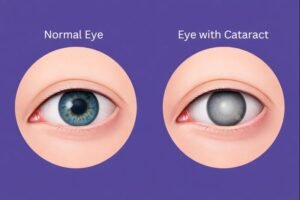
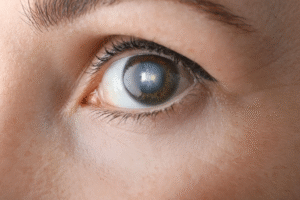
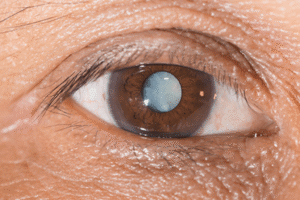
A cataract occurs when the natural lens of the eye becomes cloudy, reducing the amount of light that enters and focuses on the retina. It typically develops slowly and causes progressive blurring of vision.

Concerned about your vision? Our specialists at Krisha Eye Hospital, Ahmedabad are here to help.

Krisha Eye Hospital — Near Vaishnodevi Circle, Ahmedabad

📞 Call Now 💬 WhatsApp Us

While cataracts often affect people over the age of 60, they can also result from injury, diabetes, long-term steroid use, or even congenital causes in newborns.

Complications if cataracts are left untreated

  1. Gradual & Irreversible vision loss
  2. Hyper-mature cataract (Advanced stage)
  3. Secondary glaucoma
  4. Uveitis & Eye inflammation
  5. Double vision (Monocular diplopia)
  6. Impaired depth perception & balance issues

1. Gradual & Irreversible vision loss

The most serious consequence of an untreated cataract is progressive vision loss. As the clouding becomes more opaque, the retina receives less light, which severely reduces visual clarity. In advanced cases, untreated cataracts can lead to legal or complete blindness.

Note: Cataract-induced vision loss is reversible with surgery. But if the cataract progresses to a hyper-mature stage, the risks of surgery increase significantly.

2. Hyper-mature cataract (Advanced stage)

Over time, an untreated cataract can become hyper-mature, meaning the lens becomes very hard, white, and sometimes leaky. This makes surgical removal more complicated and increases the chances of:

  • Lens rupture
  • Zonular weakness (supporting fibers get damaged).
  • Increased risk of inflammation or infection post-surgery.

3. Secondary glaucoma

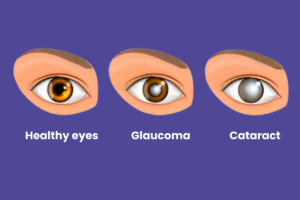
As the lens thickens due to a maturing cataract, it can block the drainage channels of the eye, increasing intraocular pressure. This can lead to secondary glaucoma, which damages the optic nerve. Glaucoma and cataract together are a dangerous combination, often resulting in irreversible vision damage if untreated.

4. Uveitis & Eye inflammation

A hyper-mature cataract may leak proteins that irritate the eye, leading to inflammation (uveitis). This can cause:

  • Redness
  • Light sensitivity
  • Eye pain
  • Cloudy or hazy vision.

If left untreated, inflammation may cause permanent damage to internal eye structures.

5. Double vision (Monocular diplopia)

Cataracts can lead to monocular double vision (double vision in one eye), especially when light scatters through the cloudy lens. This is different from binocular double vision and is particularly distressing when reading or driving.

6. Impaired depth perception & balance issues

As cataracts worsen, people may find it difficult to judge distances accurately. This can lead to:

  • Frequent trips and falls.
  • Difficulty walking downstairs.
  • Problems with parking or maneuvering vehicles.

Older adults are particularly vulnerable to injury due to cataract-related balance issues.

Why shouldn't you wait?

Since cataracts progress gradually, people often adapt to early vision changes without realizing how much their sight is affected. But the longer you delay treatment:

  • The more complex the surgery becomes.
  • The higher the risk of permanent vision damage.
  • The lower your overall quality of life.

For a simplified overview of what happens when cataracts are not treated, read our blog – What will happen if a cataract is left untreated?

Conclusion

Cataracts are highly treatable, especially when caught early. But if neglected, they can lead to major complications like secondary glaucoma, inflammation, and eventual blindness. The good news? Most of these issues are entirely preventable with timely eye care.

If you or someone in your family is experiencing blurry or fading vision, don’t wait. The team at Krisha Eye Hospital, Ahmedabad, is equipped with state-of-the-art technology and experienced specialists to diagnose and treat cataracts early and effectively.

Schedule your eye consultation today to protect your vision for tomorrow.

Author bio

Dr. Dhwani Maheshwari, an esteemed ophthalmologist with over 10 years of experience, leads Krisha Eye hospital in Ahmedabad with a commitment to advanced, patient-centered eye care. Specializing in cataract and refractive surgery, Dr. Maheshwari has performed more than a thousand successful surgeries. Her expertise lies in phacoemulsification, a technique recognized for its precision in cataract treatment.

Dr. Maheshwari’s educational journey includes an MBBS from Smt. NHL MMC, a DOMS from M & J Institute of Ophthalmology, and a DNB in Ophthalmology from Mahatme Eye Bank Eye Hospital, Nagpur. She also completed a fellowship in phacoemulsification at Porecha Blindness Trust Hospital, further enhancing her surgical skills. In addition to her work at Krisha Eye Hospital, Dr. Maheshwari serves as a consultant ophthalmologist at Northstar Diagnostic Centre.

Under her leadership, Krisha Eye Hospital aims to bring all superspecialties under one roof, offering comprehensive eye care solutions for all vision needs.

FAQs

Yes. If left untreated, cataracts can eventually cause significant vision loss or complete blindness. However, this is usually preventable with timely medical intervention.

👉 To learn more in detail, read our full blog on can cataracts cause blindness?

Untreated cataracts can become denser and lead to complications like hyper-mature cataract, inflammation, secondary glaucoma, and even permanent damage to the eye.

Cataracts generally develop slowly over several years. However, in some cases—especially due to trauma, diabetes, or certain medications—they can progress more rapidly.

Yes. Advanced cataracts can increase intraocular pressure by blocking fluid drainage, leading to secondary glaucoma, a serious condition that can cause permanent vision damage.

While early cataracts are painless, hyper-mature cataracts may cause eye discomfort, redness, or inflammation, especially if complications like uveitis develop.

Yes. Delaying cataract removal can make surgery more complex and increase the risk of permanent complications like optic nerve damage or inflammation inside the eye.

Yes. Cataracts often develop in both eyes, although one eye may be more affected than the other. It’s important to monitor and manage both eyes with regular checkups.

In early stages, a change in prescription glasses may help temporarily. But as the cataract progresses, glasses become less effective, and surgery is the only option for restoring clear vision.

Yes. Smoking, poor nutrition, prolonged UV exposure, and uncontrolled diabetes can accelerate the progression of cataracts and increase the risk of complications.

Yes, children can develop myopia, hyperopia, astigmatism, or amblyopia as early as age 3. Watch for signs like squinting, sitting too close to the TV, or frequent eye rubbing. Early detection helps prevent long-term vision problems.

Yes, if addressed in time. Vision loss caused by cataracts is usually reversible with surgery. However, if complications like glaucoma occur, some vision loss may become permanent.

Not always. Many people live with mild cataracts for years without issues. However, without monitoring or timely treatment, the risk of serious complications increases significantly.

Yes. Cataracts often cause glare, halos, and poor contrast sensitivity, making night driving difficult and increasing the risk of accidents.

👉 To understand how cataracts affect your driving ability and night vision, read our blog on Cataract and Driving.

A hypermature cataract is a very advanced cataract where the lens becomes hardened and may leak proteins, leading to inflammation and increased pressure in the eye.

Signs include worsening vision, eye pain, redness, glare sensitivity, and needing frequent changes in glasses. These symptoms mean it’s time to consult an eye specialist immediately.

Other blogs related to cataract

Cataract Surgery in Ahmedabad: A Complete Step-by-Step Patient Guide (2026)

Cataract Surgery in Ahmedabad: A Complete Step-by-Step Patient Guide (2026)

10 Best Eye Hospitals in Ahmedabad for Cataract Surgery & Eye Care (2026)

10 Best Eye Hospitals in Ahmedabad for Cataract Surgery & Eye Care (2026)

Best Cataract Surgeon in Ahmedabad: What to Look For

Best Cataract Surgeon in Ahmedabad: What to Look For

How to Prepare for Cataract Surgery: A Complete Checklist

How to Prepare for Cataract Surgery: A Complete Checklist

How to prevent eye damage from a phone ?

How to prevent eye damage from a phone ?

Headache with Blurry vision: Common causes and When to worry

Headache with Blurry vision: Common causes and When to worry

Diabetic Retinopathy: Early signs you should never ignore

Diabetic Retinopathy: Early signs you should never ignore

Blurry vision and Diabetes – What you should know

Blurry vision and Diabetes – What you should know

LASIK eye surgery Vs Contact lenses

LASIK eye surgery Vs Contact lenses

MICS cataract surgery – Procedure, Benefits, Cost & Recovery

MICS cataract surgery – Procedure, Benefits, Cost & Recovery

Pterygium: Symptoms, Causes, and Modern treatment options

Pterygium: Symptoms, Causes, and Modern treatment options

What to expect during and after myopia surgery?

What to expect during and after myopia surgery?

Early signs of eye cataract disease you shouldn’t ignore

Early signs of eye cataract disease you shouldn’t ignore

Cataract surgery & Aging: What seniors should know?

Cataract surgery & Aging: What seniors should know?

Laser cataract surgery: Is it worth the upgrade?

Laser cataract surgery: Is it worth the upgrade?

Laser vs Traditional cataract surgery: Which is better?

Laser vs Traditional cataract surgery: Which is better?

Do you still need glasses after cataract surgery?

Do you still need glasses after cataract surgery?

Choosing the right lens for cataract surgery: A complete guide

Choosing the right lens for cataract surgery: A complete guide

Types of cataract surgery explained: Benefits and Limitations

Types of cataract surgery explained: Benefits and Limitations

Cataract surgery in patients with glaucoma

Cataract surgery in patients with glaucoma

Dry eyes after cataract surgery

Dry eyes after cataract surgery

Can I do laundry after cataract surgery? 

Can I do laundry after cataract surgery? 

What do I wish I knew before cataract surgery?

What do I wish I knew before cataract surgery?

Which season is best for cataract surgery?

Which season is best for cataract surgery?

What are congenital cataracts? Symptoms, Causes, & Treatment

What are congenital cataracts? Symptoms, Causes, & Treatment

Phacoemulsification with Intraocular Lens (IOL) implantation

Phacoemulsification with Intraocular Lens (IOL) implantation

Monofocal vs Multifocal lenses: Which one should you choose?

Monofocal vs Multifocal lenses: Which one should you choose?

Complications of cataract

Complications of cataract

Best sleeping positions after cataract surgery

Best sleeping positions after cataract surgery

Showering and Washing hair after cataract surgery

Showering and Washing hair after cataract surgery

Can cataract be cured by eye drops?

Can cataract be cured by eye drops?

How long does cataract surgery take?

How long does cataract surgery take?

Housework after cataract surgery: What you can & cannot do

Housework after cataract surgery: What you can & cannot do

How soon after cataract surgery can I get new glasses?

How soon after cataract surgery can I get new glasses?

Will I need glasses after cataract surgery?

Will I need glasses after cataract surgery?

Pediatric cataract surgery: Everything parents need to know

Pediatric cataract surgery: Everything parents need to know

Cataract & Driving: What you need to know for safe road travel

Cataract & Driving: What you need to know for safe road travel

Can cataracts return after surgery?

Can cataracts return after surgery?

Everything about cataracts & surgery: A detailed guide

Everything about cataracts & surgery: A detailed guide

How to prepare for cataract surgery: A pre-surgery checklist

How to prepare for cataract surgery: A pre-surgery checklist

Is cataract surgery painful? Addressing common concerns

Is cataract surgery painful? Addressing common concerns

What will happen if a cataract is left untreated?

What will happen if a cataract is left untreated?

How to choose the right surgeon for your cataract surgery?

How to choose the right surgeon for your cataract surgery?

How do cataracts affect night vision?

How do cataracts affect night vision?

Can I cook after cataract surgery?

Can I cook after cataract surgery?

10 common myths about cataracts & cataract surgery

10 common myths about cataracts & cataract surgery

Do’s and Don’ts after cataract surgery

Do’s and Don’ts after cataract surgery

What are the most common problems after cataract surgery?

What are the most common problems after cataract surgery?

Can cataract surgery be done twice to the same eye?

Can cataract surgery be done twice to the same eye?

Can cataracts cause blindness?

Can cataracts cause blindness?

How long should you wait between cataract surgeries on each eye?

How long should you wait between cataract surgeries on each eye?

What to expect before, during, and after cataract surgery?

What to expect before, during, and after cataract surgery?

Glaucoma vs. Cataracts: What’s the difference?

Glaucoma vs. Cataracts: What’s the difference?

Difference between mature & immature cataract

Difference between mature & immature cataract

Cataract & Diabetes: Symptoms, Causes & Treatment

Cataract & Diabetes: Symptoms, Causes & Treatment

Foods not to eat after cataract surgery

Foods not to eat after cataract surgery

How long does it take to recover from cataract surgery?

How long does it take to recover from cataract surgery?

Essential precautions to take after cataract surgery

Essential precautions to take after cataract surgery

How to choose the right cataract lens (IOL)?

How to choose the right cataract lens (IOL)?

Concerned about your vision? Our specialists at Krisha Eye Hospital, Ahmedabad are here to help.

Krisha Eye Hospital — Near Vaishnodevi Circle, Ahmedabad

📞 Call Now 💬 WhatsApp Us