
Best Cataract Surgeon in Ahmedabad: What to Look For

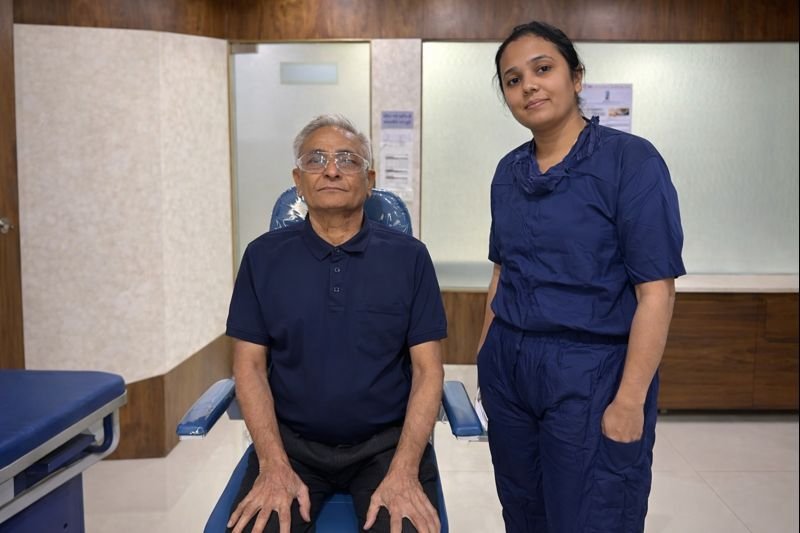
Cataract surgery is a permanent procedure. The lens implanted stays with you for life. Choosing the right surgeon in Ahmedabad determines not just how the surgery goes, but how well you see for the years that follow. This guide covers exactly what to look for, written by Dr. Dhwani Maheshwari at Krisha Eye Hospital, Ahmedabad.
In a city like Ahmedabad, where dozens of hospitals and eye clinics offer cataract surgery, it is easy to feel overwhelmed by the choices. Some clinics market heavily. Others rely on word of mouth. Price varies widely. Knowing which factors genuinely matter helps you cut through the noise and make a decision that is right for your eyes.
This guide covers the six things that most reliably distinguish a skilled, trustworthy cataract surgeon from one who simply has a clinic and a marketing budget.
Concerned about your vision? Our specialists at Krisha Eye Hospital, Ahmedabad are here to help.
Krisha Eye Hospital — Near Vaishnodevi Circle, Ahmedabad
📞 Call Now 💬 WhatsApp Us1. Qualifications: What Credentials Should the Surgeon Have?
The minimum qualification for any practising ophthalmologist in India is an MBBS followed by a postgraduate specialisation in ophthalmology. For cataract surgery specifically, look for surgeons holding one or more of these qualifications:
MBBS from a Recognised Medical College
The foundation of any medical career. Confirms the surgeon completed a full undergraduate medical education before specialising.
DOMS — Diploma in Ophthalmology
A postgraduate diploma specifically in eye diseases and surgery. Requires 2 years of dedicated ophthalmology training after MBBS.
DNB — Diplomate of National Board (Ophthalmology)
A nationally recognised qualification requiring structured residency training and rigorous national examinations. Generally considered the most comprehensive qualification.
Fellowship in Phacoemulsification or SICS
Additional hands-on training in cataract surgical techniques. Not mandatory, but indicates the surgeon invested extra time specifically in cataract surgery skills.
Specialisation in Cataract and Refractive Surgery
Confirms that cataract surgery is the surgeon's primary focus, not an additional service offered alongside a general ophthalmology practice.
Experience with Complex Cases
Ask whether the surgeon handles high-risk patients — those with diabetes, glaucoma, dense cataracts, or prior eye surgery. Comfort with complex cases reflects true surgical depth.
Important: Always verify that the postgraduate qualification is in ophthalmology specifically — not a broader medical field. Some clinics list general degrees prominently while the actual eye specialisation is buried.
2. Surgical Experience: Numbers That Actually Matter
Qualifications tell you what a surgeon learned in training. Experience tells you what they have done since. For cataract surgery, surgical volume matters more than most patients realise.
Phacoemulsification, the modern standard technique, involves ultrasound-guided lens removal through a 2 to 3mm incision. The precision required at every step improves with repetition. A surgeon who has performed 2,000 or more surgeries has encountered far more variation in lens density, pupil behaviour, intraoperative complications, and anatomical differences than one with a few hundred cases.
What to ask: "How many cataract surgeries have you performed in total, and how many do you currently perform each month?" A specific answer is more meaningful than "many" or "hundreds."
Also ask specifically about complex cataract cases. Patients with diabetes, high myopia, very dense (hypermature) cataracts, or prior corneal or glaucoma surgery carry higher surgical risk. A surgeon who is experienced with these cases will answer your question directly and specifically — not deflect it.
3. Technique and Technology: What the Hospital Should Offer
| Technique | What It Means | Best For |
|---|---|---|
| Phacoemulsification | Ultrasound probe breaks the lens into fragments through a small incision. Current gold standard. | Most patients — routine and moderately complex cataracts |
| MICS (Micro-Incision Cataract Surgery) | Even smaller incision than standard phaco. Faster healing, lower risk of post-op astigmatism. | Patients wanting fastest recovery or those with sensitivity concerns |
| SICS (Small Incision Cataract Surgery) | Manual technique with a slightly larger incision. Effective in dense cataracts with no phaco machine needed. | Dense/mature cataracts, resource-constrained settings |
| Femtosecond Laser-Assisted | Laser performs the initial incision and lens fragmentation steps with extreme precision. | Patients requiring maximum precision, premium lens implantation |
Intraocular Lens (IOL) Options
The lens implanted during surgery stays in your eye permanently. A thorough surgeon will explain your options and recommend based on your specific lifestyle, occupation, and eye condition — not offer a one-size-fits-all answer. Key lens types include monofocal (standard), toric (for astigmatism), multifocal (for glasses independence), and EDoF — Extended Depth of Focus lenses.
Be cautious if a surgeon recommends a premium lens without first asking how you spend most of your day — whether you drive at night, use a computer heavily, or need distance vision for a specific reason. A lens recommendation that is not personalised is a warning sign.
4. Five Questions to Ask Before You Decide
The quality of a pre-surgery consultation reveals a great deal about how a surgeon operates. A rushed or dismissive consultation is worth noting. These questions help you assess whether a surgeon is right for you:
How many cataract surgeries have you performed?
A specific number matters. "Many" or "hundreds" is not a meaningful answer. Surgeons with strong experience answer this directly.
Which technique will you use for my surgery, and why?
The answer should relate to your specific eye condition and cataract density — not a generic answer given to every patient.
Which lens do you recommend, and what are the alternatives?
A good surgeon explains the reasoning and walks you through the trade-offs of each option — not just the recommendation.
Have you operated on patients with my condition before?
Critical if you have diabetes, glaucoma, a very dense cataract, or prior eye surgery. A surgeon with relevant experience responds confidently and specifically.
What does post-operative follow-up look like?
Recovery visits in the first 4-6 weeks are important for catching complications early. Understand the schedule and how to reach the doctor urgently if needed.
5. What to Look For — and What to Avoid
✅ Look For
- ✓ Specific answers to surgical experience questions
- ✓ Clear explanation of your lens options
- ✓ Thorough pre-surgery eye measurements (biometry)
- ✓ Transparent discussion of risks and realistic outcomes
- ✓ Structured post-operative follow-up plan
- ✓ Comfortable, clean facility with modern equipment
- ✓ Positive patient reviews that mention specific outcomes
- ✓ Easy accessibility for follow-up visits
❌ Avoid
- ✕ Rushed consultations where questions are dismissed
- ✕ Vague experience claims ("many surgeries", "years of practice")
- ✕ Pressure to choose a premium lens without clear reasoning
- ✕ No clear protocol for post-surgery complications
- ✕ Choosing based on price alone
- ✕ Clinics that cannot show biometry equipment
- ✕ Reviews that are generic with no specific patient detail
- ✕ No answer when asked about complex case experience
6. Post-Surgery Support and Accessibility
The weeks immediately after cataract surgery require careful monitoring. Eye drops need to be administered consistently, activity must be managed carefully, and any sudden changes in vision, persistent pain, or increasing redness need prompt medical attention.
Choosing a hospital that is reasonably easy to reach from your home matters more after surgery than before it. Elderly patients travelling with family benefit especially from a location that does not involve long journey times. For Ahmedabad residents in areas like SG Highway, Chandkheda, Bopal, Gota, or Motera, proximity to a well-equipped eye hospital makes the follow-up process significantly less stressful.
Recovery tip: The first 24-48 hours after surgery are the most critical. Make sure you know exactly how to reach your surgeon or the hospital's emergency line before the day of your procedure.
Ready to Choose the Right Cataract Surgeon in Ahmedabad?
Book a consultation with Dr. Dhwani Maheshwari at Krisha Eye Hospital, Ahmedabad.
Get a thorough pre-surgery eye assessment and clear answers to all your questions.
📍 2nd Floor, Shaligram Lakeview Commercial, near Vaishnodevi Circle, Ahmedabad 382421
📞 +91 75677 67701
Frequently Asked Questions
How do I know if a cataract surgeon in Ahmedabad is experienced enough?
Ask directly how many cataract surgeries they have performed in total and how many they do each month. A surgeon with 1,000+ surgeries and an active high-volume practice is significantly more experienced than one who performs occasional procedures alongside other eye services.
What is the difference between MICS and phacoemulsification for cataract surgery?
Phacoemulsification is the modern standard, using an incision of around 2.2 to 3mm through which an ultrasound probe removes the lens. MICS (Micro-Incision Cataract Surgery) uses a smaller incision of 2mm or less, which can mean slightly faster healing and reduced post-operative astigmatism. Both are highly effective techniques.
Which intraocular lens is best for cataract surgery in Ahmedabad?
There is no single "best" lens — the right choice depends on your lifestyle, whether you have astigmatism, how much you rely on glasses currently, and your occupation. Monofocal lenses are the standard; toric lenses correct astigmatism; multifocal and EDoF lenses aim to reduce dependence on glasses for both near and distance vision. Discuss your daily activities honestly with your surgeon during the consultation.
Is cataract surgery safe for patients with diabetes?
Yes, but blood sugar must be well controlled before surgery — ideally HbA1c below 7.5% and fasting glucose below 140 mg/dL. Uncontrolled diabetes increases infection risk and slows healing. Your surgeon will review your recent blood reports before clearing you for surgery.
How soon can I resume normal activities after cataract surgery?
Light daily activities can usually resume within 24-48 hours. Avoid swimming, heavy lifting, bending at the waist, and rubbing your eye for at least 4 weeks. Your surgeon will guide you based on your specific recovery progress at each follow-up visit.
Concerned about your vision? Our specialists at Krisha Eye Hospital, Ahmedabad are here to help.
Krisha Eye Hospital — Near Vaishnodevi Circle, Ahmedabad
📞 Call Now 💬 WhatsApp Us